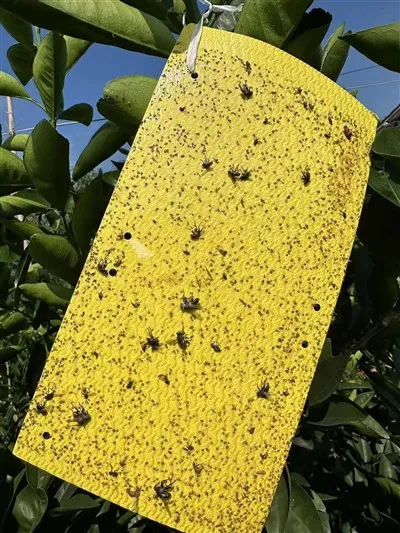
Agricultural monitoring, as a key tool in modern agricultural management, leverages advanced technologies such as the Internet of Things, remote sensing, and big data analytics to enable real-time monitoring and precise analysis of the agricultural production environment, crop growth, and pest and disease outbreaks, providing strong support for scientific decision-making in agricultural production.
In traditional agriculture, farmers often rely on experience to determine crop growth needs, making it difficult to respond promptly to climate change and pest and disease threats. Modern agricultural monitoring technologies, by deploying soil moisture sensors, weather stations, drones, and other equipment, can dynamically collect key data such as temperature, humidity, light intensity, and soil nutrients. Using satellite remote sensing technology, they can perform spectral analysis over large areas of farmland and accurately identify areas of abnormal crop growth. For example, multispectral imaging technology can enable early detection of wheat stripe rust or rice stem borer infestations, increasing efficiency dozens of times compared to manual field inspections.
The deeper value of agricultural monitoring lies in building intelligent early warning systems. Based on historical data and machine learning algorithms, these systems can predict the risks of disasters such as droughts and floods, guiding farmers to adjust irrigation plans or initiate preventative measures in advance. The EU's Copernicus program, through the Sentinel satellite network, has achieved global crop yield estimates with an accuracy exceeding 90%. my country's "Smart Farming" platform, integrating meteorological, soil, and market data, has helped the Heilongjiang Reclamation Area reduce fertilizer use by 15% and increase grain production by 8%.
In the future, with the widespread adoption of 5G communications and edge computing technologies, agricultural monitoring will move towards real-time, unmanned operations. The combination of smart sensor networks and blockchain technology can further ensure the authenticity and trustworthiness of agricultural product traceability data. This technology-enabled precision agriculture model is not only a key path to ensuring food security but also a vital engine for promoting the green and low-carbon transformation of agriculture.