In April 2012, Professor Gong from Sichuan Agricultural University gave a science popularization lecture on the prevention and control of kiwifruit canker disease in Yingjing County, Ya'an City. During the meeting, Ms. Xiong, a local kiwifruit orchard owner, raised several questions about kiwifruit management with Professor Gong and expressed her desire to produce high-quality organic kiwifruit. Professor Gong patiently answered her questions and briefly introduced the role of physical control methods in organic kiwifruit production. He also left our company's contact information so that she could communicate with us further.
After the meeting, the company quickly contacted her and learned about the situation of her orchard. Ms. Xiong's orchard is located in Qinglong Town and Wuxian Township in Yingjing County, covering a total of 20 hectares. The main cultivars are "Jinyan" and "Hongyang". Most of the orchard is flat, with a small portion located on mountainous terrain with a slope of about 27 degrees. After understanding these conditions, our technical staff developed a detailed control strategy for her orchard and began implementing it.
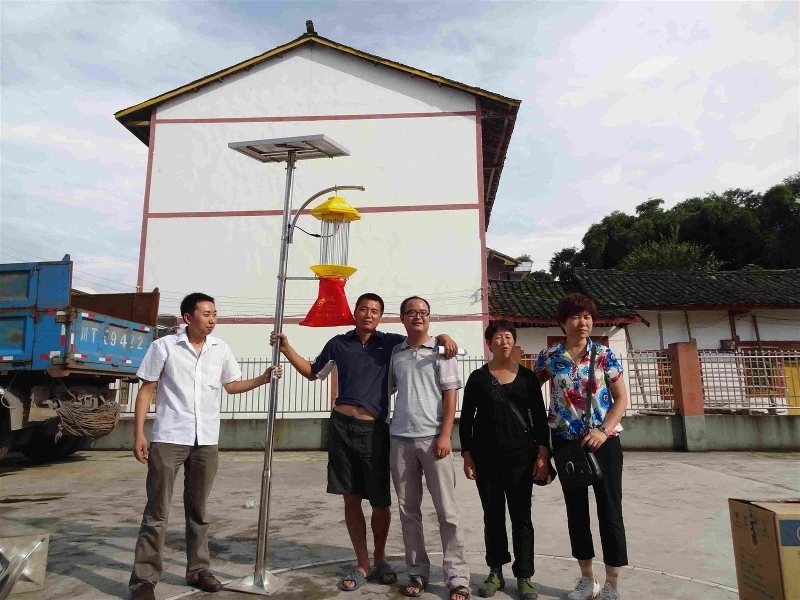
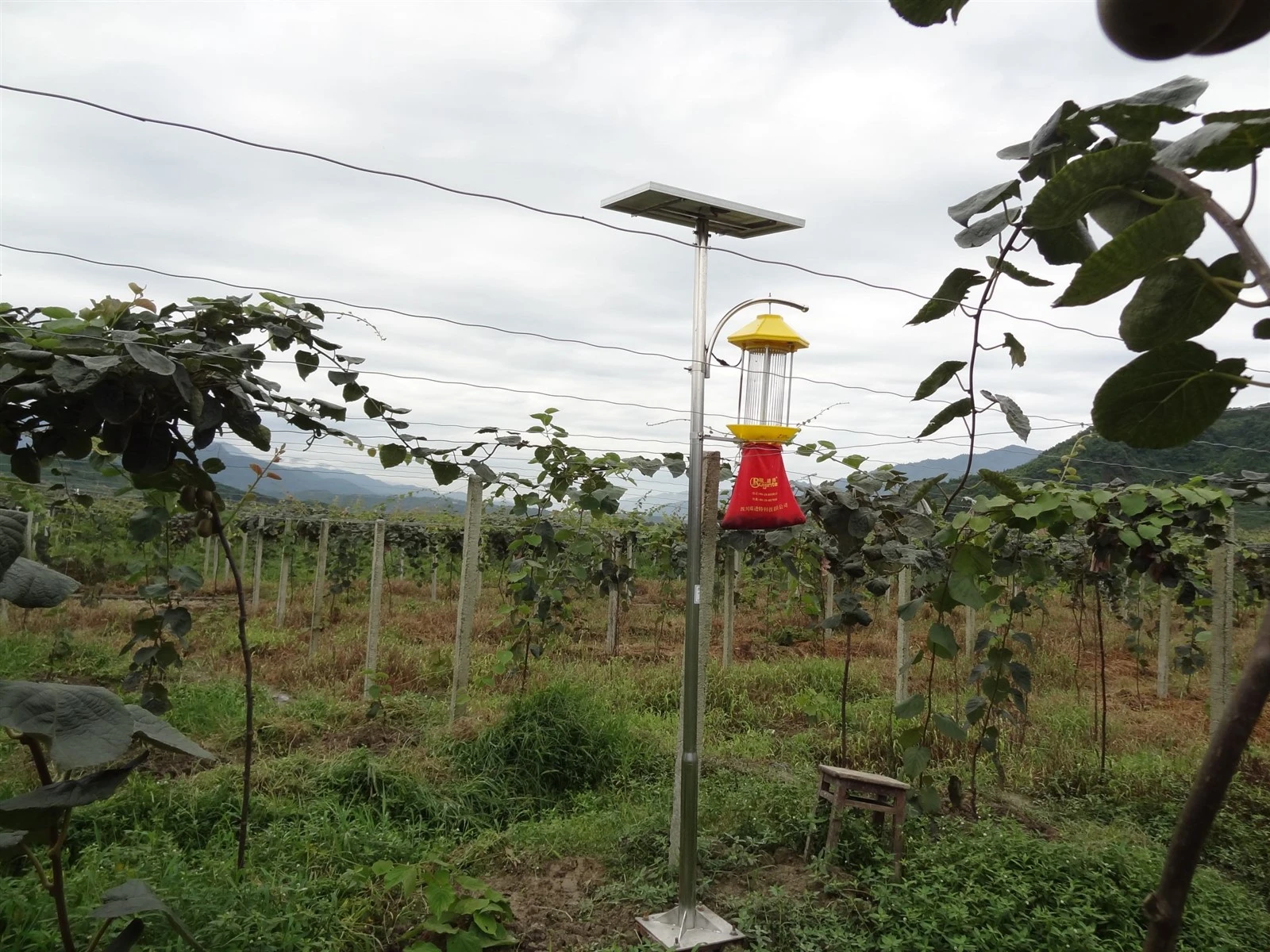
In August 2012, we accompanied Professor Chen and Professor Gong from Sichuan Agricultural University on a technical outreach activity and visited Yingjing County again. At the same time, based on the area and terrain of Ms. Xiong's orchard, we installed 13 solar insecticidal lamps for her orchard. These lamps can effectively control major kiwifruit pests such as the copper-green chafer(Anomala corpulenta), peach fruit borer(Conogethes punctiferalis), and black cutworm(Agrotis ipsilon) .
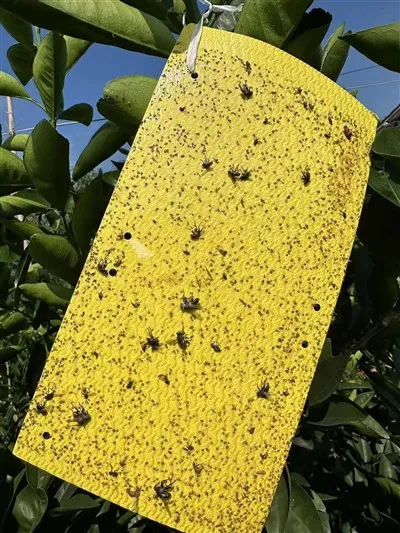
In addition, every year we provided her with a large number of yellow sticky traps, pheromones and matching traps. The sticky traps can be used to monitor and control pests such as aphids(Aphidoidea), whiteflies (Aleyrodidae), and leafhoppers (Cicadellidae). The pheromones were mainly used to monitor pests such as the peach fruit borer and black cutworm. We also provided her with detailed usage strategies for these products: when to start monitoring; when to increase the number of sticky traps to control pests; and when chemical pesticides should be used as an intervention.
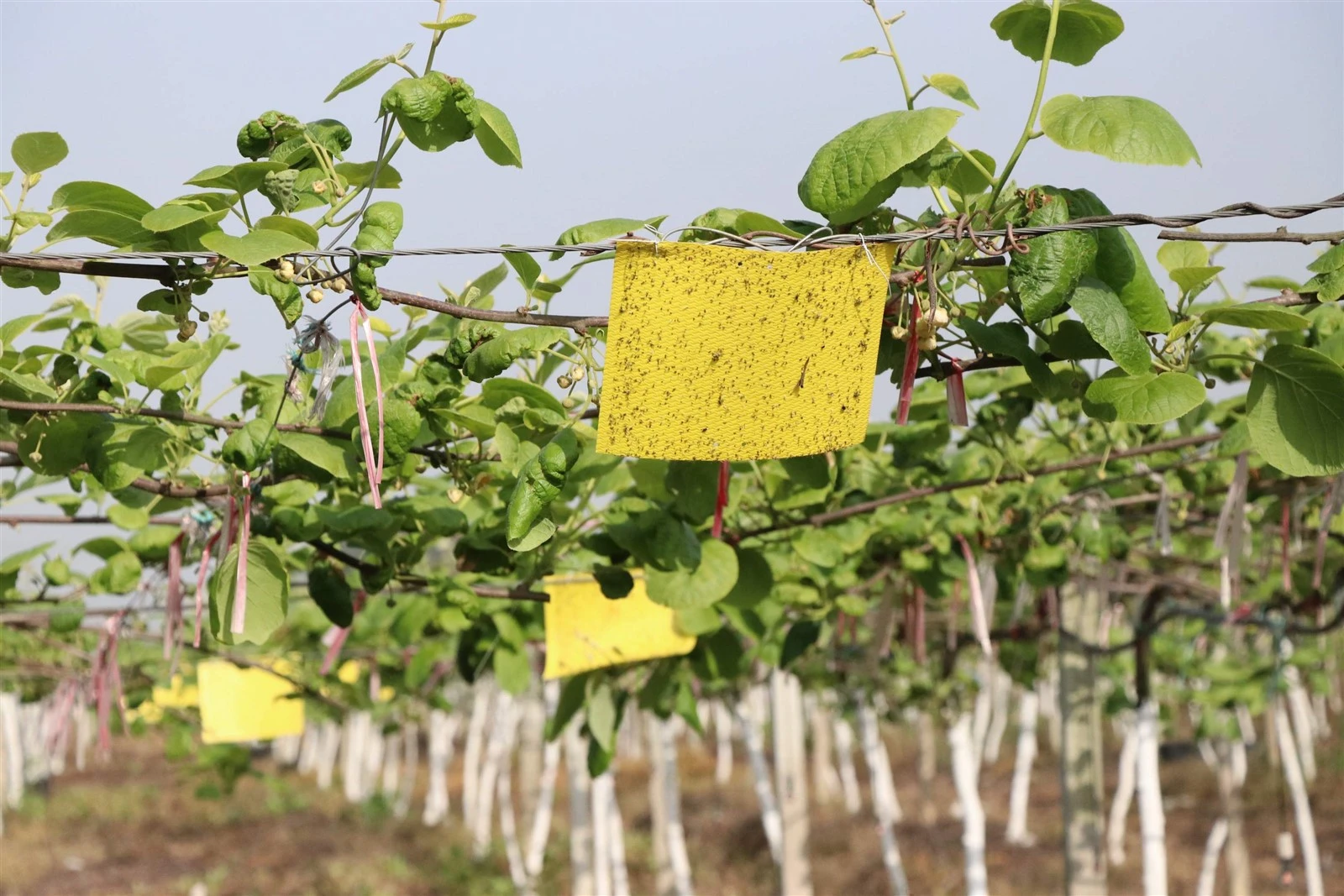
In June 2016, we visited Yingjing County again and met Ms. Xiong. She gave us the most authentic feedback from her experience: over four years, the orchard had reduced chemical pesticide use by 57% overall; yields remained stable, with no reduction in production caused by insect pests even once; pesticide residues in the kiwifruit were greatly reduced, meeting the requirements for nationally recognized organic agricultural products; and the field purchase price was 28% higher than the average price offered by peers. Our product quality was also very solid. In four years, the insecticidal lamps had only had their lamp tubes replaced once, and no other components had failed. Because Ya'an has historically been known as the "Rain City," Ms. Xiong had once been deeply worried about the adhesive quality of the sticky traps. However, over four years of use, even though our sticky traps were repeatedly soaked by rain, their effectiveness was not affected. Every sticky trap was replaced only after it had become covered with pests.
From the lecture in 2012 to the solid feedback Ms. Xiong provided in 2016, this 20-hectare orchard in Yingjing County has followed a verifiable path: physical control is not a "supporting player" in organic kiwifruit production, but a foundational measure capable of serving as the backbone of pest management. Thirteen solar insecticidal lamps, a continuous supply of yellow sticky traps and pheromone traps, and clear monitoring and intervention strategies ultimately produced results of a 57% reduction in chemical pesticide use, stable yields with no pest-related production losses, and pesticide residues meeting the requirements for nationally recognized organic agricultural products. Even more notably, this solution withstood the test of Ya'an's rainy climate-sticky traps remained effective after rain, and the insecticidal lamps had only had their lamp tubes replaced once in four years. This shows that physical control is not only suitable for kiwifruit orchards, but also has stable, durable, and replicable practical conditions.
FAQ
Q: What is the effective control range of an insecticidal lamp?
A: The effective control range of a single insecticidal lamp is usually 2 hectares. In mountainous areas or where tall plants cause shading, the control range will be reduced.
Q: What is the application rate of sticky traps for monitoring, and what is the rate for control?
A: For monitoring, 45–75 sticky traps per hectare are required. If the monitoring traps become fully covered with pests within one week, additional sticky traps should be used for control, at a rate of 300–400 traps per hectare.
Q: How long can sticky traps be used?
A: Sticky traps can be used for more than 3 months in environments from −10°C to 70°C, and they remain adhesive after rain. Unopened sticky traps can be stored in a cool, shaded place for more than 2 years. Under severe pest pressure, sticky traps should be replaced promptly once they are covered with pests.
Q: What is the application rate of pheromone traps?
A: The application rate of pheromone traps is 30–45 sets per hectare.
Q: How long can pheromone traps be used?
A: The service life of pheromone lures is affected by temperature and is usually about 3 weeks; high temperatures shorten their service life. The traps are usually made of plastic and can be reused for more than 2 years. Traps equipped with sticky boards require timely replacement of the sticky boards.