The Asian corn borer (Ostrinia furnacalis) belongs to the family Crambidae, order Lepidoptera. It is a globally significant maize pest, widely distributed across all maize-producing regions in China, with severe outbreaks in Northeast China, North China, the Huanghuaihai Plain and Southwest China. The adult moth measures 10–15 mm in body length with a wingspan of 25–35 mm. Males have yellowish-brown forewings marked with two serrated dark lines; females have pale yellowish-brown forewings with indistinct stripes. Eggs are flat and oval, milky white to pale yellow, arranged in fish-scale-like clusters of dozens to over one hundred eggs. Larvae normally develop through 5 instars, reaching 20–30 mm at full maturity. Their body colour varies, with 3 greyish-yellow to brown longitudinal stripes on the back. Pupae are 15–18 mm long, yellowish-brown to reddish-brown. The Asian corn borer has a polyphagous diet. Besides maize, it infests sorghum, millet, cotton, sunflower and many other crops.

Larvae bore into maize and cause damage throughout the whole growing season, attacking leaves, stalks, tassels and ears. Newly hatched larvae cluster to feed on leaf mesophyll. Once the damaged central leaf unfolds, it shows neat rows of pinholes, known as "patterned leaves". After the 3rd instar, larvae disperse and bore into stalks, feeding on pith and creating tunnels that block nutrient transport. Infested stalks are prone to snapping in strong winds. Damaged tassels often break and interfere with pollination. During the ear stage, larvae bore into ears, cobs and kernels, leading to incomplete grain filling, shrivelled seeds and ear rot. Fully mature larvae overwinter inside maize stalks, cobs, root stubble and host crop residues. It can complete 1 to 7 generations per year from northern to southern China.

Yield losses caused by Asian corn borer are extremely heavy. Statistics show that this pest normally triggers around 10% maize yield loss in China, and loss rates can exceed 30% in severe outbreak years. Total crop failure may occur in heavily affected fields. Annual grain losses caused by Asian corn borer alone reach 6 to 9 million tons (Sanya Municipal People's Government). Surveys in Zhangwu County, Liaoning show that 81% of sampling sites have over 85% stalk borer rate, and 45% of sites reach 100% stalk borer rate; over 95% of ear stalks are infested. Maize yield drops by 7%–11% when each stalk hosts 1–3 borers, and the average yield reduction rises to 28% with 4–5 larvae per stalk. One larva on each ear stalk leads to an average yield loss of 21% (Survey of Asian Corn Borer in Zhangwu County). For the second generation of Asian corn borer, each additional borer hole per plant increases yield loss by 4.52%, and every 10 cm longer tunnel raises yield loss by 8.34%. The borer hole rate in suburban Beijing maize fields is generally around 15%, and can exceed 90% in severe cases.

Integrated Pest Management
Promptly dispose of maize stalks, cobs and root stubble after harvest through chopping and returning to field, composting or fuel use to kill overwintering larvae and reduce pest populations. Deep ploughing in autumn and winter buries leftover crop residues into soil to cut down overwintering pests. Optimize crop layout, avoid continuous maize cropping and advocate rotation with non-gramineous crops. Select insect-resistant varieties, optimize water and fertilizer management and prevent excessive nitrogen application that causes over-lush plant growth.
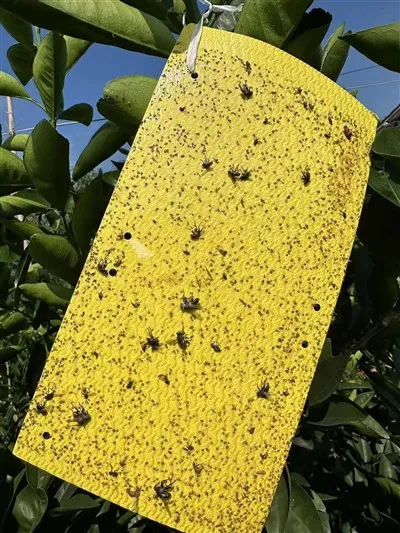
Take advantage of adult phototaxis and install frequency-vibration insect-killing lamps or black light traps to trap moths, one lamp for every 2–3 hectares. Deploy pheromone traps or food attractants to trap adults during the initial peak of moth emergence. Biological control serves as the core of green management. Release Trichogramma wasps (such as Trichogramma dendrolimi) from early to peak egg-laying period. Release 200000–300000 per hectare in 2–3 applications at intervals of 3–5 days.

Adopt the control strategy of "suppress early generations to protect later growth". Prioritize two critical application windows: late whorl stage and tasseling-silking stage. The economic threshold is 10% of plants showing patterned leaves or 5 egg masses per 100 plants. Granules can be applied into leaf whorls at the whorl stage. Spraying is recommended during ear stage, focusing on maize ears and upper leaves. Rotate insecticides including chlorantraniliprole, tetraniliprole, emamectin benzoate, spinetoram and lambda-cyhalothrin. Apply pesticides strictly following labelled dosages and observe pre-harvest intervals. Alternate chemicals with different modes of action to delay resistance development. Do not arbitrarily increase dosage or spray frequency to guarantee maize safety.
Data source:
Sanya Municipal People's Government
Survey of Asian Corn Borer in Zhangwu County
GB/T 23391.3-2026 Technical Specification for Control of Major Maize Diseases and Insect Pests-Part 3: Asian Corn Borer
NY/T 1611-2017 Technical Specification for Monitoring and Forecasting of Corn Borer
DB14/T 749-2013 Technical Code of Practice for Integrated Control of Corn Borer