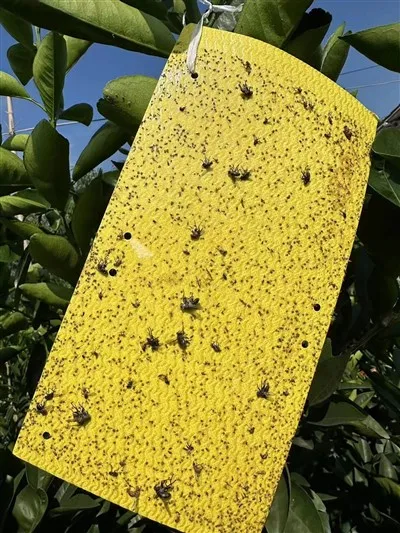
Sticky insect traps, a widely used tool for agricultural pest control, play a vital role in global agricultural production. Their design not only influences their effectiveness but also directly impacts their market acceptance. Understanding the appearance characteristics of sticky insect traps can help foreign trade professionals better promote these products and meet the needs of customers in different regions.
Overall, sticky insect traps typically feature a flat or cylindrical design, making them easy to hang or place near crops. Common sticky insect traps are often light-colored, such as yellow or blue, because many pests have a tropism for specific colors. For example, yellow sticky insect traps are commonly used to trap small flying insects like aphids and whiteflies, while blue sticky insect traps are more attractive to pests like thrips. Color selection is not only based on pest behavioral research but also directly affects the product's visual recognition, making it more conspicuous in the field.
Sticky insect traps are typically made of plastic or cardboard coated with a special adhesive. Plastic traps are more durable and suitable for long-term outdoor use, while paper traps are less expensive and suitable for short-term or small-scale applications. The edges of traps are typically rounded to prevent accidental scratches on operators and to prevent tearing during hanging. Furthermore, some high-end sticky insect traps feature a double-layer design: a transparent outer protective cover and an inner sticky rubber sheet. This enhances entrapment and prolongs life.
In the international trade market, the design of sticky insect traps must also take into account the agricultural practices and climatic conditions of different regions. For example, customers in tropical regions may prefer durable and waterproof traps, while users in temperate regions may prioritize cost-effectiveness. Therefore, when designing products, suppliers should consider the actual needs of their target markets and optimize design features, such as size, color, or material, to enhance product competitiveness.
In short, the appearance of sticky insect traps not only influences their functionality but also directly impacts their marketing effectiveness. When promoting such products, international trade practitioners should fully understand their design features and make targeted adjustments based on customer needs to increase their international market share.