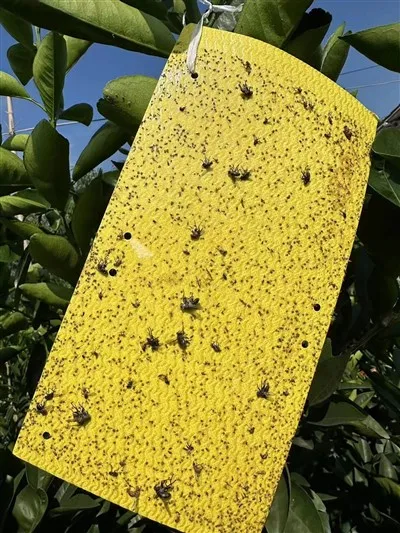
As an efficient and environmentally friendly pest control tool, sticky insect traps hold broad application prospects in modern agriculture and ecological conservation. They reduce the use of chemical pesticides through physical trapping, aligning with the trend of green agriculture. They also offer advantages such as ease of operation and manageable costs, making them expected to play a significant role in multiple fields in the future.
In agricultural production, sticky insect traps are primarily used to monitor and control lepidopteran pests, such as corn borers and cotton bollworms. Traditional chemical control methods can easily lead to increased pest resistance and environmental pollution. Sticky insect traps, on the other hand, use sex pheromones or light sources to attract pests, precisely capturing target populations and minimizing impacts on beneficial insects and non-target organisms. With the development of precision agriculture, intelligent sticky insect traps (such as those integrated with IoT technology) can enable remote monitoring and data analysis, further improving control efficiency and reducing labor costs.
In ecological conservation, sticky insect traps contribute to maintaining biodiversity. For example, in nature reserves or orchards, excessive pesticide use can disrupt ecological balance. Physical trapping can reduce accidental harm to natural enemies and promote sustainable agricultural development. Furthermore, for invasive pests such as the fall armyworm, sticky traps can serve as an early detection tool, enabling timely control measures to prevent the spread of pests.
In the future, with advances in materials science and intelligent technology, the sensitivity, durability, and intelligence of sticky traps will continue to improve. If governments and businesses increase R&D investment and promote standardized application, sticky traps have the potential to become a core tool in integrated pest management systems, providing strong support for global food security and ecological protection.