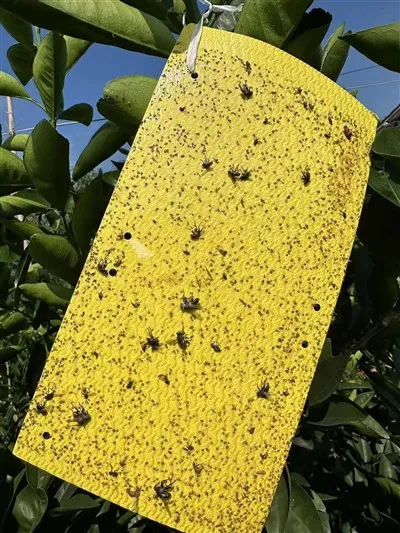
Sticky insect traps are a pest control tool based on physical control principles and are widely used in agriculture, horticulture, and warehouse management.Their core function is to attract and capture target pests through a specific sticky material or bait, thereby reducing the use of chemical pesticides and achieving environmentally friendly and efficient pest management. In recent years, with the advancement of sustainable agricultural development worldwide, demand for sticky insect traps in international trade has grown significantly, making them a key product of interest in the foreign trade industry.
From a functional perspective, sticky insect traps primarily rely on two mechanisms: physical adhesion, which directly sticks to pests on contact using a highly sticky surface; and trapping and guidance, which attracts pests into the trap by releasing a specific scent or color. Common sticky insect trap types include yellow sticky boards, pheromone traps, and light-attracted sticky insect traps, each designed to target the habits of different pests. For example, yellow sticky boards are highly attractive to small flying insects such as aphids and whiteflies, while pheromone traps can precisely target specific pests, such as stored-air pests or fruit flies.
Sticky insect traps have enormous export potential in the foreign trade sector. On the one hand, demand for green agricultural technologies continues to rise in developed countries. Sticky insect traps, with their chemical-free and environmentally friendly features, meet the stringent environmental standards of markets like the EU and North America. On the other hand, developing countries, in the process of agricultural modernization, are in strong demand for low-cost, easy-to-use pest control tools. Sticky insect traps, due to their simplicity and effectiveness, have become the preferred choice for many farmers. Furthermore, customized services (such as trap designs tailored to specific crops or pests) further enhance the product's market competitiveness.
In the future, as global agriculture moves towards smarter and more sustainable development, sticky insect traps will feature even more diverse functions, such as integrating IoT technology for remote monitoring. For foreign trade practitioners, a deep understanding of the functional foundations and market demand for sticky insect traps will help them seize growth opportunities in this niche sector and promote the international promotion of related products.