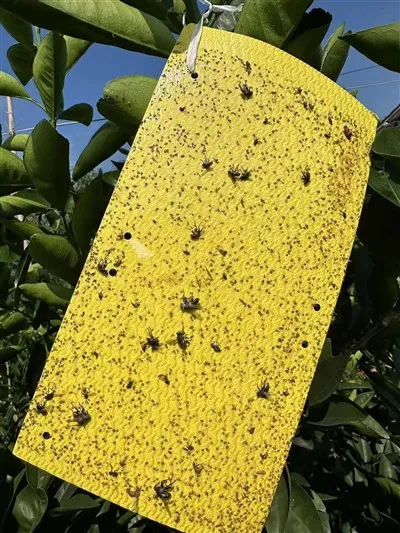
As an efficient and environmentally friendly pest control tool, sticky insect traps play a vital role in agricultural production and warehouse management. Their unique design and functionality have made them a highly sought-after agricultural product in the international trade industry, particularly in export-oriented agricultural countries and regions.
The key advantage of sticky insect traps lies in their non-chemical control method. Compared with traditional pesticides, sticky insect traps capture pests physically, avoiding the potential harm of chemical agents to the environment, crops, and human health. This makes them more competitive in the international market, particularly in Europe, the United States, and Southeast Asia, where environmental standards are stringent. Furthermore, sticky insect traps are typically made of non-toxic and biodegradable materials, further aligning with the global trend towards sustainable agriculture.
Functionally, sticky insect traps are highly targeted and durable. Different types of sticky insect traps can target specific pests, such as moths, aphids, and fruit flies, using color, scent, or bait to attract target pests, thereby improving capture efficiency. Furthermore, their one-time investment and long-term effectiveness reduce agricultural production costs, making them particularly suitable for use in large-scale farms and warehouses.
In the foreign trade sector, the advantages of sticky traps lie not only in the product itself but also in their adaptability to diverse climates and crops. Many countries import these products to reduce their reliance on chemical pesticides while meeting international food safety standards. Furthermore, with the expansion of global agricultural trade, demand for sticky traps as a complementary pest control tool continues to grow, providing stable market opportunities for foreign trade companies.
In short, sticky traps, with their environmentally friendly, efficient, and low-cost characteristics, have become a vital tool for pest management in modern agriculture. Within the foreign trade industry, they enjoy stable market demand and enormous potential, creating win-win opportunities for suppliers and buyers.