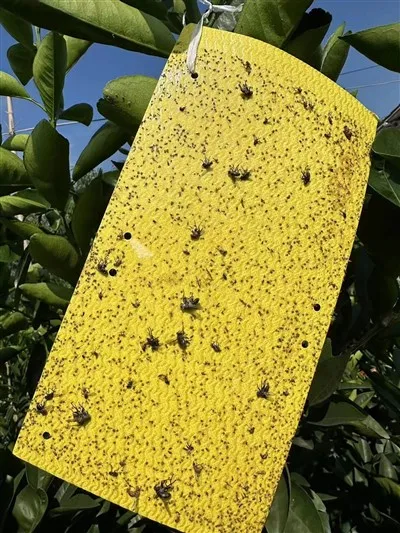
1. Basic Pest Profile
Tuta absoluta, commonly known as the tomato leafminer, is a highly destructive cross-border invasive pest subject to strict quarantine rules in most countries. Originating in South America, it has spread widely across Europe, Africa, the Middle East and Southeast Asia. It targets solanaceous crops including tomatoes, eggplants, peppers and potatoes, with tomatoes suffering the worst damage by far.
This moth reproduces at an alarming rate, producing 10 to 12 overlapping generations every year. A single female can lay up to 260 eggs, and its full life cycle only lasts 32 to 46 days. When temperature and humidity conditions are ideal, its population surges rapidly. Adult moths travel long distances carried by wind, enabling fast cross-field and cross-border infestations.

2. Key Damages to Crops
Latest research confirms Tuta absoluta has invaded over 100 countries and regions, ranking among the most devastating pests for commercial tomato farming. Without proper control measures, yield losses range from 30% up to total crop failure. In East Africa alone, annual financial losses linked to this pest hit tens of millions of US dollars, with global direct economic damage exceeding 50 million USD each year.
Damage is caused entirely by larvae, which attack every above-ground part of tomato plants across all growth stages. Right after hatching, larvae burrow into leaf tissue to feed, leaving thin winding tunnels that are hard to spot in early stages. At high population levels, mature larvae bore into new shoots, side buds, tender stems and young fruits. They tend to feed where fruit calyxes attach to fruit bodies, triggering massive premature fruit drop.

3. Downsides of Reliance on Chemical Pesticides
Most farmers rely solely on insecticides for years, leading to severe pesticide resistance in the pest. Frequent spraying drives up production costs and harms pollinating bees and natural pest predators, breaking the farm's ecological balance. Organic plantations and export-oriented farms face strict chemical residue limits, making heavy pesticide use unfeasible and creating export trade barriers.
4. Integrated Physical & Biochemical Eco-Control Solutions
Solution 1: Pheromone sticky traps (core monitoring & mass trapping, our flagship product)
Our triangular traps paired with dedicated Tuta absoluta sex pheromone lures mimic the scent of female moths to draw and trap males. This cuts off mating opportunities and curbs population growth at the source. Chemical-free and residue-free, the system fully meets organic agriculture standards.
Solution 2: Solar-powered insecticidal lamps for full-area trapping
Equipped with targeted UV light, these lamps catch adult moths after dark, working best on vast open fields and connected orchards. When used alongside pheromone traps, control efficiency improves significantly. Running purely on solar power with no wiring required, the weatherproof lamps withstand intense sunlight and heavy rain, fitting tropical overseas growing regions perfectly.
Solution 3: Supplementary physical prevention tactics
Fit 60-mesh insect screens on greenhouse vents to block incoming adult moths; promptly remove infested leaves and damaged fruits and dispose of them far from planting zones; rotate tomatoes with non-solanaceous crops to cut down overwintering pest populations in soil.