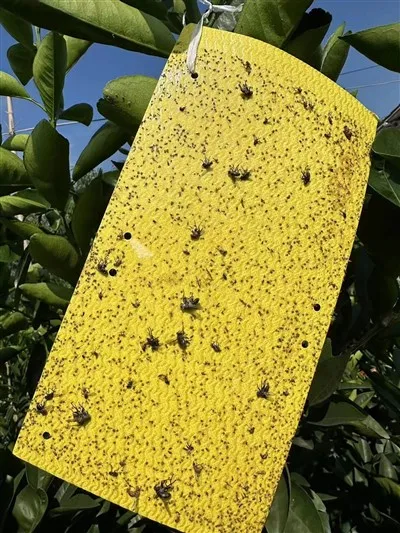
The fall armyworm (Spodoptera frugiperda) is a high-risk cross-border migratory pest officially warned by the FAO. Originating from tropical America, it has spread to more than 100 countries and severely threatens global food security. This pest infests over 350 crop species, with maize as its primary host, while also damaging rice, sorghum, sugarcane, cotton and various vegetables. It features extremely strong reproduction and migration capabilities: it breeds 4-6 overlapping generations yearly in warm regions. A single female moth can lay up to 1,500 eggs, with a full life cycle of only 30 days. Adult moths can travel 100–500 km overnight, easily triggering large-scale cross-border pest outbreaks.

According to official FAO statistics, uncontrolled fall armyworm infestations can trigger 30%–100% crop yield loss. In 12 major maize-producing countries in sub-Saharan Africa, the pest causes 8.3–20.6 million tons of annual maize loss, bringing a total economic loss of USD 13 billion. Severe field yield reduction reaches 47.3% in Kenya and 32% in Ethiopia, with extreme cases leading to total crop failure. In the Americas, Brazil suffers over USD 1 billion in annual losses, while the southeastern United States records more than USD 60 million in yearly economic damage. It also widely causes 30%–60% yield drops in Southeast Asian grain fields. Larval feeding damages crop ears and leaves, causing mold growth and toxin contamination, which degrades crop quality and fails export standards.

Long-term reliance on single chemical pesticides has caused widespread pest resistance worldwide, lowering control efficiency and raising farming costs. Excessive chemical spraying kills natural predators and breaks farm ecological balance. Besides, pesticide residues restrict organic farming and crop export trade, failing to support sustainable pest management.
Scientific green integrated control methods are widely promoted globally. First, real-time pest monitoring and early warning allow timely intervention at the low-instar larva stage to prevent large-scale outbreaks. Second, agricultural optimization measures like crop rotation and regular field cleaning effectively reduce overwintering pest populations. Third, eco-friendly physical trapping and biological control using Beauveria bassiana, Bt agents and plant-based pesticides suppress pest reproduction without residues. For severe infestations, farmers adopt low-toxicity pesticides with alternating use of different formulations to delay resistance and ensure safe, stable and long-term pest control.
Data Sources: Official field assessment reports from FAO, CABI economic impact studies, USDA regional loss statistics and multi-year field surveys conducted across East Africa (2017–2023)