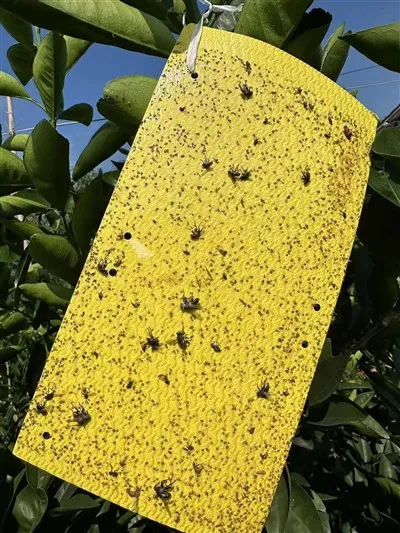
Agricultural monitoring, as a crucial tool for ensuring food security and optimizing production management, has evolved inextricably with the evolution of human civilization. As early as ancient times, farmers adjusted their farming practices by observing astronomical phenomena, soil conditions, and crop growth. This can be considered the precursor to agricultural monitoring. For example, the ancient Egyptians used the Nile River's flood cycle to predict sowing times, while China during the Shang and Zhou dynasties used the "Twenty-Four Solar Terms" to guide agricultural activities. While these empirical methods did not yet form a systematic monitoring system, they laid the foundation for later generations.
After the Industrial Revolution in the 18th century, advances in science and technology propelled the modernization of agricultural monitoring. The invention of soil chemical analysis and meteorological instruments made quantitative research possible. In the 19th century, German chemist Liebig proposed the "mineral nutrition theory," prompting scientists to systematically analyze the relationship between soil nutrients and crop growth. The widespread establishment of meteorological stations provided data support for agricultural meteorological monitoring. The advent of remote sensing technology in the mid-20th century revolutionized agricultural monitoring. The use of satellite and aerial imagery has made it possible to monitor crop growth, pest and disease distribution, and water resources over large areas. In the 1970s, the United States pioneered the use of multispectral satellite data to assess global grain production.
In the 21st century, the Internet of Things, artificial intelligence, and big data technologies have further empowered agricultural monitoring. Sensor networks collect real-time environmental parameters such as soil moisture and temperature, drones enable precise field inspections, and machine learning algorithms can predict pest and disease outbreak trends from massive amounts of data. During this period, agricultural monitoring has evolved from single-factor observation to multi-dimensional, intelligent, and integrated management, providing a scientific basis for addressing climate change and improving agricultural production efficiency. Historically, the development of agricultural monitoring has been closely linked to technological innovation. In the future, its intelligence and precision will continue to rise, becoming a core pillar of sustainable agriculture worldwide.