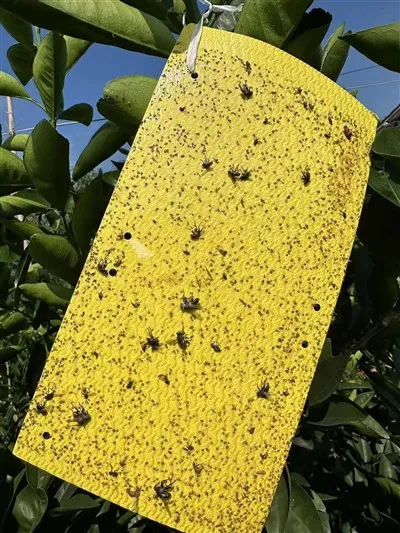
Agricultural monitoring, as one of the core technologies in precision agriculture, has made significant progress in recent years, driven by remote sensing, the Internet of Things, and artificial intelligence. Traditional agricultural monitoring relies primarily on manual observation and ground sampling, which is inefficient and has limited coverage. With technological advances, remote sensing technologies based on satellites and drones have become an important means of large-scale farmland monitoring. Multispectral, hyperspectral, and thermal infrared sensors can provide real-time information on crop growth, pest and disease distribution, and soil moisture conditions, providing data support for precise decision-making.
The application of the Internet of Things (IoT) has further enhanced the sophistication of agricultural monitoring. By deploying equipment such as soil sensors, weather stations, and cameras, farmers can obtain real-time information on key parameters such as field temperature and humidity, nutrient content, and crop growth status. This data is transmitted to a cloud platform via wireless networks and, combined with big data analysis, enables intelligent management of irrigation, fertilization, and pest control.
The introduction of artificial intelligence and machine learning algorithms has enabled agricultural monitoring to move from data collection to intelligent diagnosis. Deep learning models can automatically identify crop types, pest and disease types, and predict yields from massive amounts of remote sensing imagery, significantly improving monitoring accuracy and efficiency. For example, image recognition technology based on convolutional neural networks has been widely used for field weed detection and fruit maturity assessment.
Despite rapid development, agricultural monitoring technology still faces challenges such as data fusion, insufficient model generalization, and high costs. In the future, with the integrated application of 5G communications, edge computing, and blockchain technologies, agricultural monitoring will develop towards real-time, automated, and sustainable development, providing stronger technical support for global food security and sustainable agricultural development.