Ruijinte Completes 12-Month Outdoor Weathering Test On Sticky Trap Materials For Agro-Forestry Monitoring

Sep 16, 2026

Leave a message

Ruijinte has completed a 12-month outdoor weathering test on sticky trap base materials and insect adhesive used in agricultural and forestry pest monitoring. The test evaluated how different material combinations perform under continuous UV exposure, seasonal rainfall, high humidity, and temperature fluctuations. The results provide practical guidance for selecting sticky traps in different climate zones.

Sticky traps are widely used in green pest control programs for monitoring flying pests such as whiteflies, thrips, aphids, leafminers, and small moths. In open-field orchards and forest plots, however, trap performance depends heavily on material durability. A trap that loses adhesion or warps after a few weeks produces unreliable data and increases replacement labor.

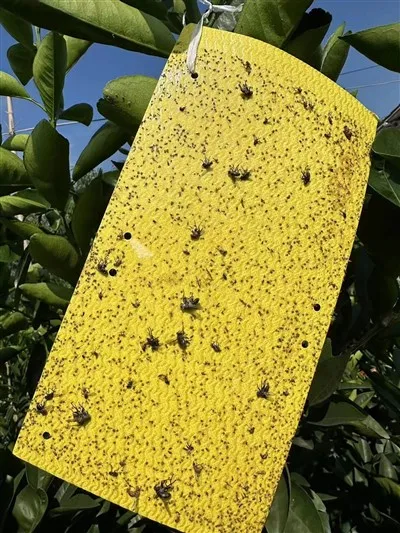
Yellow Sticky Traps for Flying Plant Insect
Insect Yellow Glue Trap Boards


Test Setup and Scope

The 12-month test was conducted at an outdoor exposure site representative of subtropical agro-forestry conditions. Test samples included standard paper-based sticky boards, waterproof sticky cards, and UV-stabilized sticky trap sheets. All samples were mounted on standard field frames at typical monitoring height and exposed to natural weather conditions without artificial shading.

Evaluation criteria included:

  • Adhesive retention and tackiness over time
  • Base material deformation, warping, and delamination
  • Color fading under UV radiation
  • Physical integrity after repeated rain and humidity cycles
  • Ease of insect identification on the trap surface

Samples were inspected at regular intervals, and performance was recorded under both dry and wet conditions.Ruijinte Completes 12-Month Outdoor Weathering Test on Sticky Trap Materials for Agro-Forestry Monitoring
Key Findings

The test produced several practical observations for field deployment.

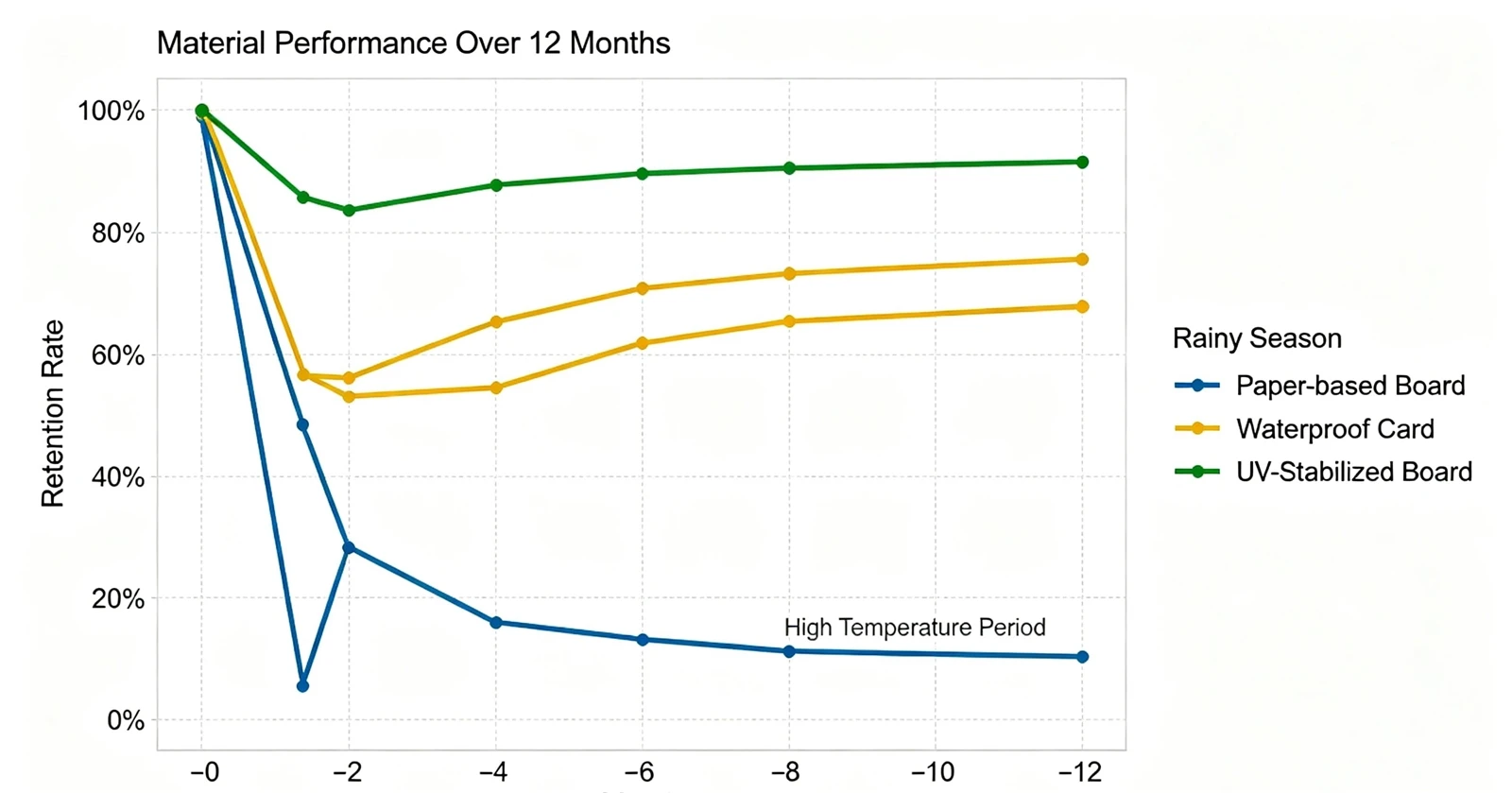
Waterproof base materials significantly outperformed paper-based boards in humid and rainy conditions.

Standard paper-based boards showed noticeable warping and edge delamination after repeated wet-dry cycles. Adhesive strength declined faster on these boards, and captured insects became difficult to identify when the surface became stained or wrinkled. Waterproof sticky cards maintained their shape and adhesive quality for a longer period.

UV-stabilized materials retained color and adhesive longer under direct sunlight.

Non-stabilized yellow boards faded noticeably within the first few months. Color fading reduces visual attraction for target pests. UV-stabilized sheets maintained a more consistent yellow tone and showed less brittleness at the edges.

High temperatures affected adhesive flow, while low temperatures increased stiffness.

During peak summer conditions, some adhesives became more fluid and tended to spread or drip under extreme heat. In cooler periods, adhesives became stiffer, which can reduce capture efficiency for small insects. Material selection should consider the local temperature range, not only average conditions.

Rain intensity and duration were more important than total annual rainfall.

Short, heavy rain events caused more physical damage to paper-based boards than prolonged light rain. Waterproof cards with sealed edges performed better under heavy rain impact.

Trap replacement intervals should be climate-adjusted.

In dry, mild conditions, some UV-stabilized traps remained usable for longer than the standard replacement interval. In hot, humid, and rainy conditions, replacement was needed more frequently to maintain data quality.Sticky Insect Tape Pest Control

Practical Implications for Agro-Forestry Monitoring

The results support a climate-based approach to sticky trap selection. For tropical and subtropical orchards, waterproof and UV-stabilized traps are recommended for outdoor monitoring. In dry inland areas with strong sunlight, UV stabilization is the primary requirement. In high-humidity greenhouses, waterproof cards remain the preferred option regardless of outdoor climate.
The test also confirmed that sticky trap performance is not only about initial adhesive strength. Long-term reliability depends on the combination of base material, adhesive formulation, and protective design. A trap that captures insects well in the first week but fails in the second month is not suitable for seasonal monitoring programs.
Ruijinte will continue to evaluate sticky trap materials under different climate conditions. The findings are used to improve product specifications and to provide technical reference for pest monitoring programs in diverse agro-forestry environments.
Send Inquiry
Haven't found the product you are looking for yet?
Please contact us to help you customize the solution.
contact us