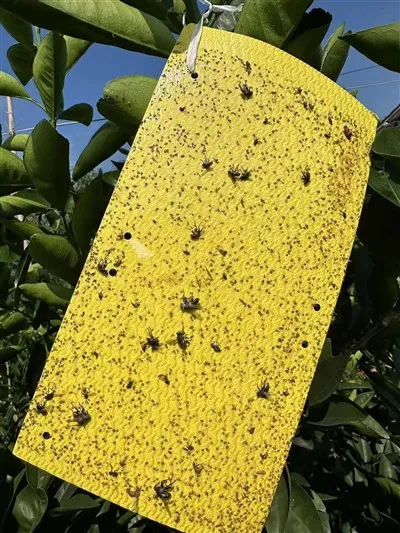
In agricultural production, pest control remains a core component for ensuring crop yield and quality. As global agriculture moves toward sustainable development, physical pest control methods are gaining widespread attention for their environmental friendliness and effectiveness. Sticky traps, with their unique advantages, have become a highly sought-after crop protection tool in the international market.
Sticky traps utilize visual or chemical attraction, exploiting the insects' phototaxis, color attraction, or pheromone response, to attract target insects to a highly sticky surface, achieving pesticide-free destruction. Their core value lies in their precise targeting of specific pests, such as fall armyworms, aphids, or fruit flies, significantly reducing the risk of accidental damage to beneficial insects and the environment. Compared to traditional chemical pesticides, sticky traps avoid pesticide residue issues, meet market access requirements for stringent pesticide residue standards in the EU and North America, and help agricultural product exporters enhance their international competitiveness.
In terms of application scenarios, these tools are widely used in field crops, orchards, and greenhouses. For example, in Southeast Asia's rice-producing regions, yellow sticky traps effectively suppress planthoppers that spread viral diseases. In European vineyards, sticky traps incorporating sex pheromones can specifically reduce the spread of grapevine hairy borer disease. Modern technology has also developed biodegradable materials and intelligent monitoring capabilities, which help farmers predict pest outbreaks and optimize control strategies by recording the number of insects caught.
In international trade, the growing demand for sticky traps is closely linked to global green agriculture policies. Agricultural departments in many countries have incorporated sticky traps into their IPM (Integrated Pest Management) recommendations, encouraging export-oriented agricultural enterprises to equip themselves with standardized physical control equipment. For foreign trade practitioners, understanding the functional principles and regional applicability of such products can help them precisely meet the plant protection needs of emerging markets while promoting the value of environmentally friendly agriculture.
As the concept of sustainable agriculture deepens, sticky traps are evolving from auxiliary tools to key components of plant protection systems. Their low technical barriers and high efficiency and environmental friendliness will continue to provide reliable support for global food security.