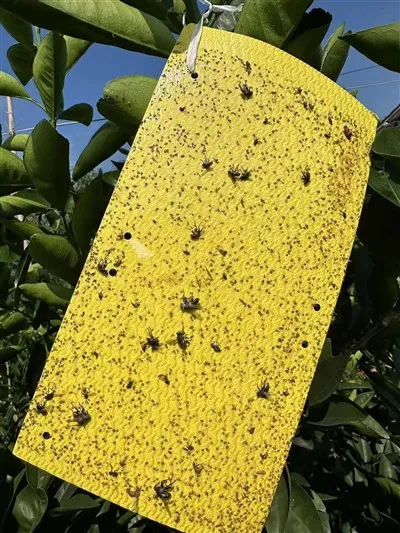
As an innovative tool for environmental monitoring and biocontrol, plastic traps demonstrate significant scientific value in ecology, agricultural science, and environmental engineering. Their core significance lies not only in their efficient capture of target organisms but also in providing precise data support for scientific research, helping us understand the dynamic balance of ecosystems and the potential impacts of human intervention.
From the perspective of ecological monitoring, plastic traps use material properties (such as color, scent release, or shape design) to specifically attract specific species, such as pests, invasive species, or endangered species. This selective capture capability enables scientists to quantify population density, migration paths, and reproductive behavior, providing empirical evidence for ecological model development. For example, in agriculture, plastic traps can monitor pest population dynamics, help optimize biocontrol strategies, reduce the use of chemical pesticides, and thus mitigate environmental pollution risks.
The scientific significance of plastic traps also extends to the intersection of materials science and environmental engineering. Researchers are exploring the sustainability of plastic traps for long-term monitoring by improving their materials (such as biodegradable plastics) and structural design. For example, some experimental traps use photocatalytically degradable plastic, which decomposes naturally after completing its mission, avoiding secondary pollution. Such innovations not only advance the development of green material technology but also provide new approaches for "leaving no trace" research.
On a more macro level, the use of plastic traps demonstrates the refinement and scientific nature of human intervention in nature. Through data accumulation and analysis, scientists can more accurately predict the risk of ecological imbalance and formulate intervention measures. For example, using traps to monitor the spread of invasive species can provide an early warning system for biodiversity conservation.
In summary, the scientific significance of plastic traps lies not only in their functionality but also in their scalability as a research tool-they bridge basic science with applied practice, paving the way for sustainable ecological management.