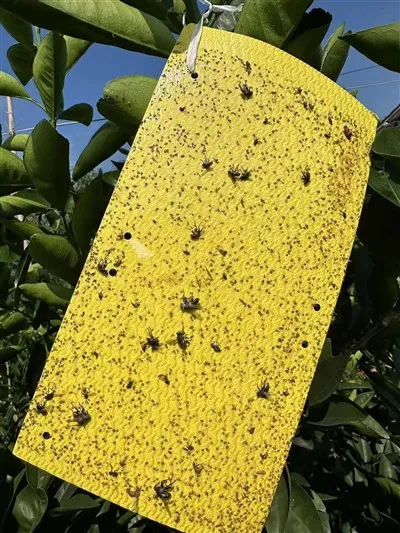
Plastic traps, widely used in agriculture, pest control, and scientific research, must be designed not only to efficiently capture target organisms but also to be environmentally friendly and sustainable. In modern design, the development of plastic traps has gradually shifted from focusing solely on functionality to focusing on comprehensive ecological benefits, reflecting a rethinking and optimization of human intervention in nature.
First, the core design goal of plastic traps is to precisely capture target organisms, such as pests or experimental specimens, while minimizing the impact on non-target organisms. This philosophy requires scientific and rational material selection and structural design. For example, by adjusting the attractant release rate, entrance size, and internal space layout, only specific organisms can be attracted and trapped. Furthermore, transparent or translucent plastics are often used to observe capture progress while minimizing excessive stimulation of the target organism.
Second, environmental sustainability is a key consideration in contemporary plastic trap design. Traditional plastic products can contaminate soil or water bodies due to long-term residue. Therefore, modern designs tend to utilize biodegradable plastics or modular structures for easy recycling and reuse. Some traps even incorporate solar-powered attractant release systems to further minimize environmental impact.
Finally, humanization and cost-effectiveness are also crucial design considerations. Lightweight, easy to install, and cost-effective plastic traps are more readily available, especially in resource-limited areas. Optimizing production processes, such as injection molding, can ensure durability while reducing manufacturing costs.
In summary, the design concept of plastic traps organically combines functionality, environmental friendliness, and practicality, reflecting the coordinated development of scientific and technological progress and ecological protection. In the future, with the deepening of materials science and ecological research, plastic traps will become even more intelligent and sustainable, providing better solutions for the harmonious coexistence of humans and nature.