Introduction
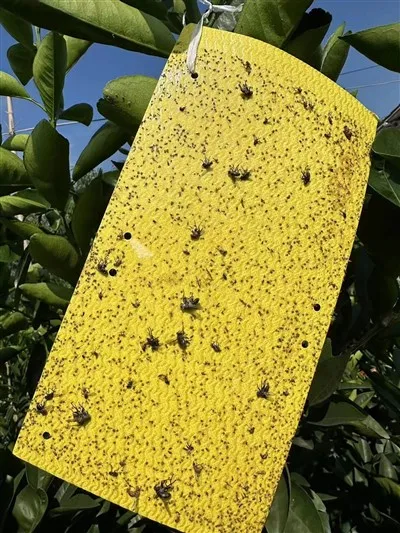
Pheromone monitoring is one of the most precise tools in integrated pest management. Unlike color sticky traps, which attract a broad range of insects, pheromone lures are species-specific. They attract target pests usually males to a trap where they can be counted. This provides early warning of pest activity and helps growers time interventions more accurately.
However, pheromone monitoring only works when the lure and trap are matched correctly to the target pest and the field environment. Using the wrong lure, storing it improperly, or replacing it too late can lead to missed pest flights and poor management decisions. This guide covers the practical fundamentals of pheromone lure and trap selection, storage, and replacement.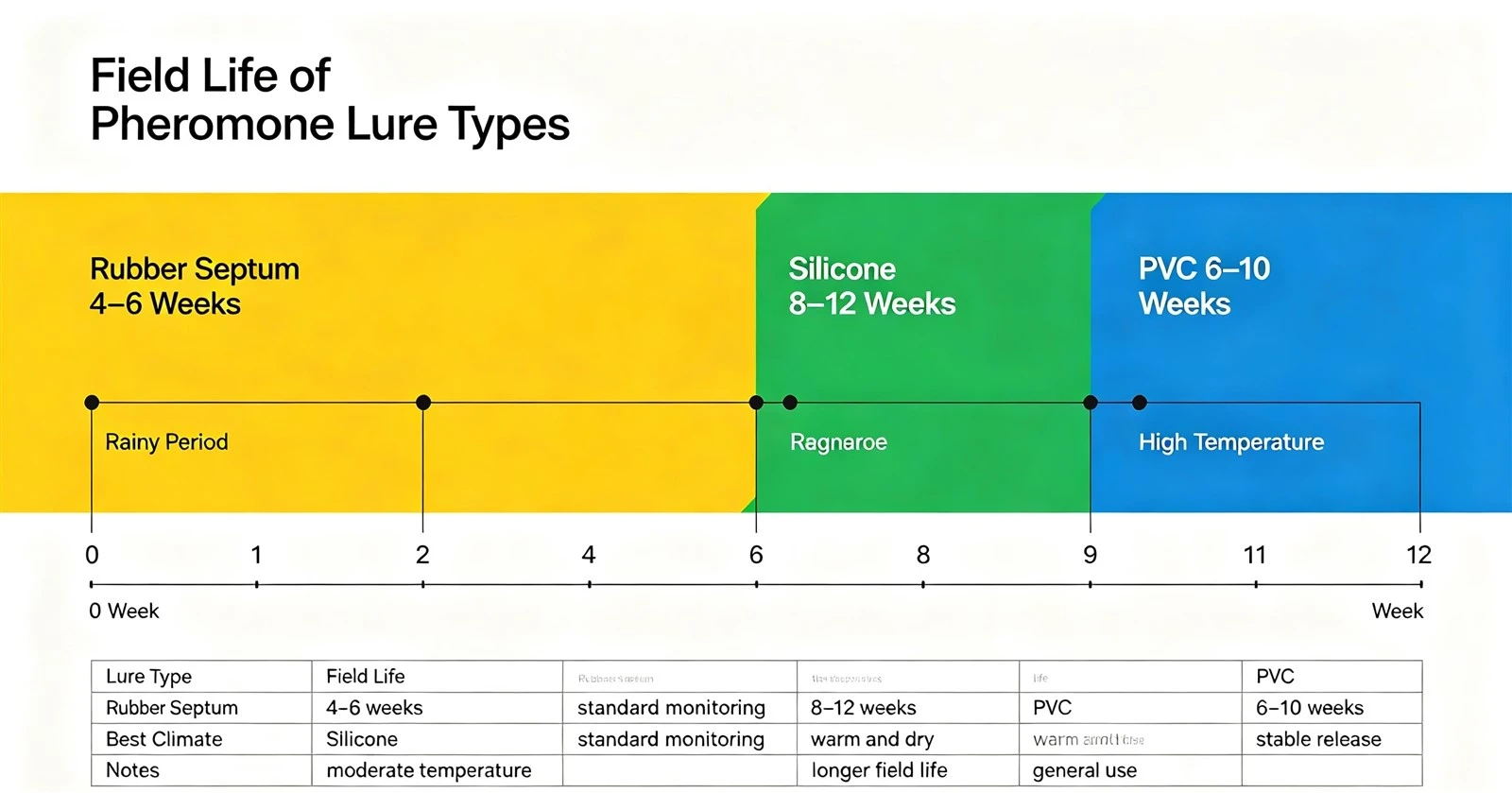
Understanding Pheromone Lure Types
Pheromone lures are available in several physical forms, each with different release characteristics.
Matching the Lure to the Target Pest
Pheromone lures are highly specific. A lure designed for codling moth will not attract oriental fruit moth, even if both species are present in the same orchard. This specificity is an advantage for monitoring, but it means that growers must know which pests they are targeting.
Before selecting a lure, identify:
- The primary pest species of concern.
- Whether multiple species need to be monitored simultaneously.
- The flight periods of each species.
- Local regulations for pheromone monitoring of quarantine pests.
In orchards with multiple pest species, separate traps with different lures are usually required. Placing multiple lures in the same trap is not recommended because different pheromone components can interfere with each other.
Trap Design Options
Storage and Handling
Pheromone lures are sensitive to heat, light, and oxygen. Improper storage can reduce their attractiveness before they are even deployed.
Recommended storage practices:
- Store lures in sealed foil pouches or airtight containers.
- Keep them in a refrigerator at 4°C (39°F) or cooler, but do not freeze unless specified.
- Avoid direct sunlight and high temperatures during transport.
- Wear gloves when handling lures to avoid contaminating them with skin oils or other pheromones.
- Do not store different pheromone lures together in the same container, as cross-contamination can occur.
In the field, attach lures according to the manufacturer's instructions. Avoid touching the lure surface with bare hands. If multiple lures are used, store unused lures separately and label them clearly.
Replacement Intervals
Pheromone lures do not last forever. Their attractiveness declines over time as the active ingredients evaporate. Replacement intervals depend on:
- Lure type and initial loading.
- Temperature and wind exposure.
- Target pest flight duration.
- Manufacturer recommendations.
In general, rubber septa may last 4 to 6 weeks in moderate conditions, while silicone lures may last 8 to 12 weeks. In hot climates, replacement may be needed more frequently. For accurate monitoring, follow the recommended interval for the specific lure and pest.
Sticky inserts in delta traps should also be replaced regularly. A saturated or dusty sticky surface will not capture insects effectively, even if the lure is still attractive.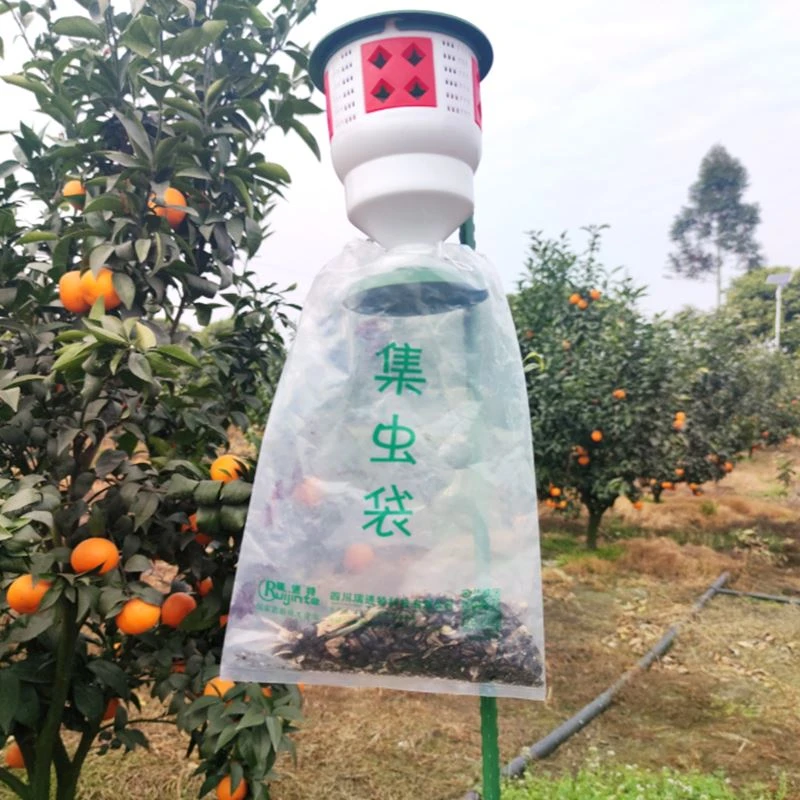
Practical Deployment Tips
Common Mistakes to Avoid
Using the wrong lure for the target pest.
- Storing lures at room temperature for extended periods.
- Leaving lures in the field beyond their effective life.
- Placing traps in direct sunlight or exposed to strong wind.
- Failing to replace sticky inserts regularly.
- Mixing different pheromone lures in the same trap.
- Avoiding these mistakes improves data quality and makes pheromone monitoring a reliable part of IPM.
Conclusion
Pheromone lures and traps are precise tools for pest monitoring. They provide early warning of target pest activity and help growers make timely, targeted management decisions. However, their effectiveness depends on correct selection, proper storage, and regular replacement.
By understanding lure types, trap designs, and field deployment principles, growers and plant protection technicians can build a pheromone monitoring program that delivers consistent, actionable data.
FAQ
Q: How long do pheromone lures last?
A: Rubber septa last 4–6 weeks, silicone 8–12 weeks, and PVC or controlled-release dispensers 12 weeks or longer in moderate conditions. Hot, windy, or dusty weather shortens field life. Follow the manufacturer's schedule and adjust based on trap catches.
Q: How should I store pheromone lures?
A: Store them in sealed, airtight packaging in a cool, dark place. Refrigeration at 4°C (39°F) or below is recommended; a freezer is ideal for long-term storage. Do not store different lures together because cross-contamination reduces attraction.
Q: Why are my pheromone traps not catching anything?
A: Common causes include the wrong lure for the target species, expired or poorly stored lure, incorrect trap height or placement, and timing outside the pest's flight period. Check each factor before replacing the trap.
Q: Can one trap monitor multiple pests?
A: No. Do not place lures for different species in the same trap. Pheromone components can interfere with each other. Use separate traps with species-specific lures, spaced at least 4–5 meters apart.
Q: How often should I replace sticky inserts?
A: Replace them when dirty, saturated, or no longer sticky. In high-pressure situations, every 1–2 weeks; in low-pressure monitoring, every 3–4 weeks. A dusty or saturated insert will not capture insects effectively.
Q: What trap density should I use?
A: It depends on the goal. For detection, 1 trap per 5–10 acres is common. For quarantine pests, 1 trap per 1–2 acres may be used. For mass trapping, 12–20 traps per acre has been reported for some moths. Match density to the pest and objective.