Introduction
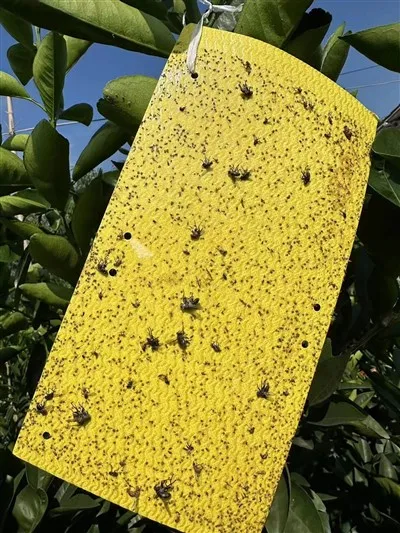
Sticky traps are a cornerstone of physical pest monitoring. They are affordable, easy to use, and provide direct visual evidence of flying insect activity. But their broad attraction can also capture non-target insects, including pollinators, parasitic wasps, and predatory beetles. In integrated pest management (IPM) programs that rely on biological control, this bycatch can work against the very goal of sustainable pest control.
Reducing non-target catch is not about abandoning sticky traps. It is about using them more precisely. This article explains why bycatch happens, which beneficial insects are most at risk, and how to adjust trap selection, placement, and timing to minimize unintended captures.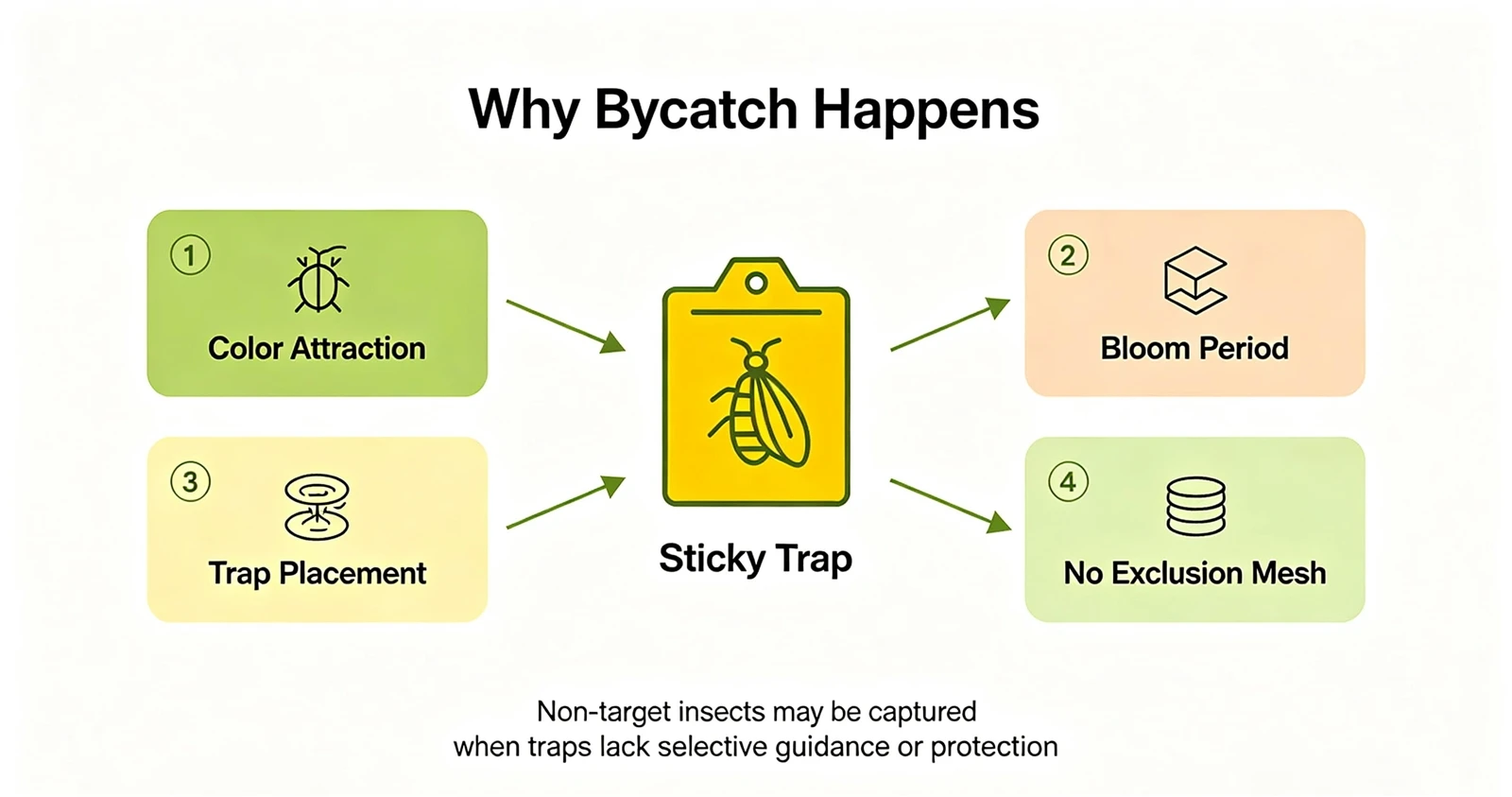
Why Sticky Traps Catch Non-Target Insects
Most sticky traps rely on color attraction. Yellow is highly attractive to many flying insects, including whiteflies, aphids, thrips, and leafminers. Unfortunately, yellow also attracts bees, hoverflies, parasitic wasps, and other beneficial insects. Blue traps, often used for thrips, can also capture pollinators and natural enemies.
The problem is not the trap itself, but the lack of selectivity. A yellow sticky board in a flowering orchard during bloom can quickly fill with bees and other pollinators. In a greenhouse with biological control agents, parasitic wasps may be captured alongside target pests.
Non-target catch has three main consequences:
- It reduces the population of beneficial insects that help control pests naturally.
- It makes trap counting more time-consuming because target pests must be separated from non-target insects.
- It can discourage growers from using sticky traps, even though they are valuable monitoring tools.
Which Beneficial Insects Are Most at Risk
The most commonly captured beneficial insects on sticky traps include:
- Bees and bumblebees – Attracted to yellow and blue surfaces, especially during bloom.
- Hoverflies – Important aphid predators whose adults are attracted to yellow.
- Parasitic wasps – Small, often dark-colored insects that can be difficult to see on sticky surfaces.
- Lady beetles and lacewings – Less common on sticky traps, but still susceptible when traps are placed near beneficial insect releases.
- Predatory mites – Not typically captured on sticky traps, but affected by broad-spectrum insecticide use that sticky trap data might inadvertently encourage.
Understanding which beneficial insects are active in a given crop and season helps determine when and where sticky traps should be deployed.

Practical Strategies to Reduce Bycatch
1. Use pheromone lures to increase selectivity.
Color attraction is broad. Pheromone lures are species-specific. When monitoring a known target pest, such as citrus psyllid or codling moth, adding a pheromone lure to a sticky board increases target capture while reducing reliance on color alone. This can lower non-target catch because the trap becomes more attractive to the target species and less dependent on broad visual signals.
2. Adjust trap color to the target pest.
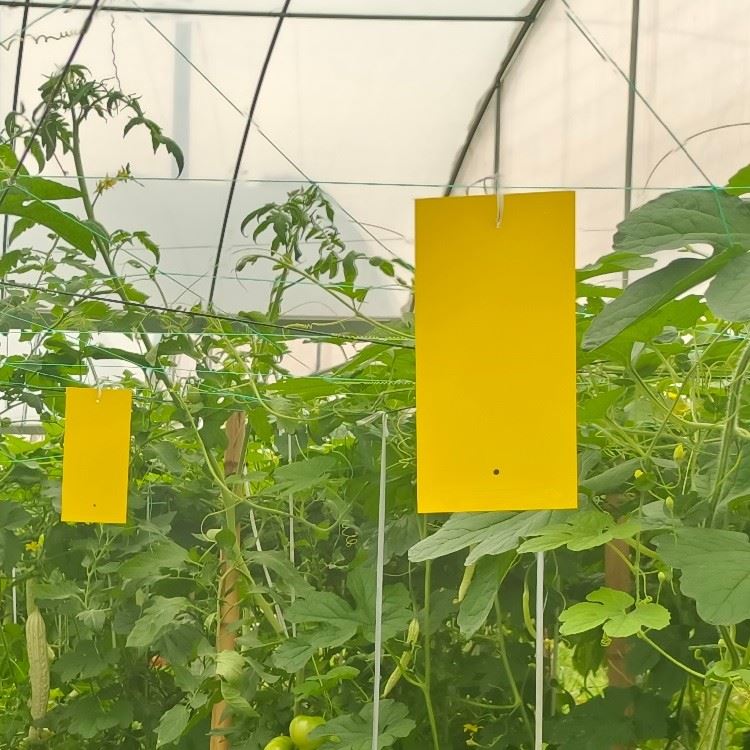
Yellow is the most common color for general monitoring, but it is also the most attractive to pollinators. If the primary target is thrips, blue traps may be more appropriate. If the target is a specific moth, a pheromone trap with a less visually attractive surface may be better. Matching color to target pest reduces unnecessary attraction of beneficial insects.
3. Avoid placing traps in flowering zones during bloom.
Pollinators are most active in flowering crops. During bloom, sticky traps placed directly in the canopy can capture large numbers of bees. Whenever possible, move traps to field borders, headlands, or non-flowering areas during peak bloom. In orchards, avoid hanging traps directly next to flowering trees.
4. Use exclusion grids or mesh covers.
Some sticky trap designs include mesh or grid covers that allow small pests to pass through while blocking larger beneficial insects such as bees and butterflies. These covers can reduce bycatch without significantly affecting target pest capture. They are especially useful in greenhouses and nurseries where pollinators or biological control agents are active.
5. Time trap deployment around beneficial insect releases.
In IPM programs that use biological control, avoid deploying sticky traps immediately after releasing parasitic wasps or predatory mites. Give beneficial insects time to establish and disperse. If monitoring is necessary during this period, use pheromone-specific traps rather than broad-spectrum yellow boards.
6. Reduce trap density where beneficial insects are concentrated.
More traps do not always mean better data. In areas with high beneficial insect activity, using fewer traps or smaller boards can reduce bycatch while still providing useful monitoring information. Focus trap placement on pest entry points and high-risk zones rather than uniform grid coverage.
7. Check and replace traps frequently.
A saturated sticky trap is more likely to capture beneficial insects simply because there is less adhesive surface available for target pests. Regular replacement ensures that traps remain effective and reduces the chance of accidental beneficial insect capture.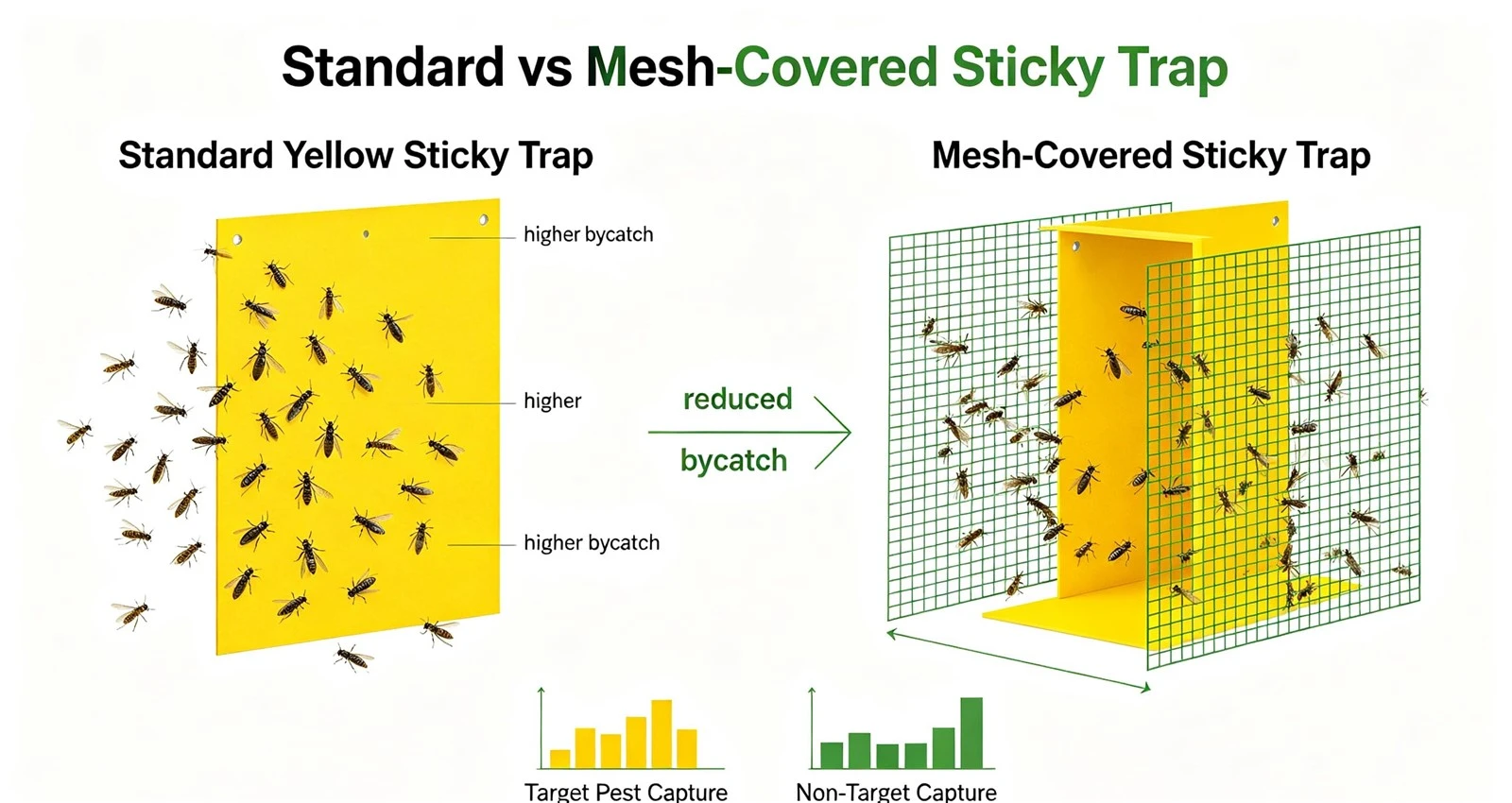
Balancing Monitoring and Conservation
Sticky traps are monitoring tools, not pest elimination devices. Their primary value is to provide early warning and population trend data. When used carefully, they can support biological control by helping growers decide when to release natural enemies and when to intervene with targeted treatments.
However, sticky traps should not be used in a way that undermines beneficial insect populations. In organic and IPM systems, beneficial insects are a key part of the pest control strategy. Protecting them is not optional-it is essential.
A practical approach is to combine sticky trap monitoring with other methods. Pheromone traps provide species-specific data. Visual crop inspection confirms damage symptoms. Weather data helps predict pest activity. Together, these tools reduce reliance on any single monitoring method and lower the risk of beneficial insect bycatch.
Conclusion
Non-target catch is a real limitation of sticky trap monitoring, but it can be managed. By selecting the right trap color, using pheromone lures, adjusting placement, and timing deployment around beneficial insect activity, growers can collect useful pest data while protecting pollinators and natural enemies.
The goal is not to stop using sticky traps. The goal is to use them more intelligently. In sustainable agro-forestry systems, monitoring and conservation must work together.
FAQ
Q: Are yellow sticky traps harmful to bees?
A: Yes. Yellow attracts honeybees, bumblebees, and hoverflies, especially during bloom. Avoid placing traps in flowering zones at peak bloom. Move them to borders or non-flowering areas, or use less attractive colors and pheromone lures.
Q: How do I reduce beneficial insect bycatch?
A: Use mesh guards, switch to less attractive colors, add species-specific pheromone lures, and place traps at heights matching the target pest. Check traps often and release live beneficials when possible.
Q: Do sticky traps catch ladybugs and lacewings?
A: Yes, though less often than bees, hoverflies, and parasitic wasps. Use exclusion mesh near beneficial release sites and avoid deploying sticky traps immediately after releasing biological control agents.
Q: Can I use sticky traps with beneficial insects?
A: Yes, but use them for monitoring, not mass trapping. Deploy fewer traps where beneficials are concentrated, use mesh-covered traps, and check frequently. Pheromone traps are better for species-specific monitoring.
Q: How often should I check sticky traps?
A: At least weekly during high pollinator activity. Daily checking is best during orchard bloom. Frequent checks let you release live beneficials and replace saturated traps.
Q: What is the biggest sticky trap mistake?
A: Placing yellow traps directly in flowering canopies during bloom. Another mistake is using too many traps to "kill more pests." Sticky traps are monitoring tools, not mass trapping devices.