Aphids, also known as plant lice, belong to the Aphididae family under Hemiptera. Major species include wheat aphids, vegetable aphids and cotton aphids. They are widespread recurring agricultural pests across China with heavily overlapping generations. Capable of parthenogenetic reproduction, aphids multiply at an extremely fast rate and break out rapidly under warm, dry weather. They not only directly damage crops by sucking their flesh but are also the core vectors for viral diseases in wheat, vegetables, and oilseed crops, posing a significant threat to food security and the stable yield and quality of cash crops.


Quick identification: Aphids are divided into two categories: winged aphids and wingless aphids. They are small in size and commonly come in three colors: green, black, and yellow. They often gather densely on tender parts of crops such as the heart leaves, tender stems, the back of leaves, and the ears of grain to feed. A clear sign of aphid activity is the sticky, clear honeydew they continuously excrete onto leaves and fruits.

Aphids have a wide host range, damaging hundreds of crops including wheat, corn, rapeseed, various vegetables, cotton, and peanuts. Direct damage manifests as sucking sap from the phloem of crops, disrupting nutrient transport and causing leaf curling and wrinkling, withering of young stems, insufficient grain filling in wheat, and hindered pollination in corn, leading to weakened plant growth, reduced yield, and lower quality. Indirect damage is even more significant, as aphids can transmit dozens of plant viruses, such as wheat yellow dwarf virus, cucumber mosaic virus, and peanut stripe virus, causing epidemics of viral diseases in the field. The secondary losses caused by viral diseases far exceed the direct damage caused by aphid feeding.

According to the 2025 National Major Soybean Pest Forecast released by the National Agro-Tech Extension and Service Center, soybean aphids and other pests reached moderate occurrence nationwide in 2025, covering 3.8 million hectares. They occur constantly in the Huang-Huai-Hai soybean belt and rank as a key monitoring target during the growing season. Data from Heze Bureau of Agriculture and Rural Affairs, Shandong Province, shows aphid outbreaks cut grain yields by 10%-20% on average, with losses exceeding 30% in severely infested fields. Surveys record around 10 aphids per 100 plants on ordinary plots, while heavily damaged land carries over 100 aphids per 100 plants. Losses surge further when viral diseases coincide with aphid infestations. Fast reproduction, strong dispersal ability and growing pesticide resistance make conventional control ineffective, creating long-term pest management challenges.

Control measures follow the principle of prevention-focused early suppression, green priority and precise intervention, guided by the 2025 Major Grain Crop Pest Control Technical Plan issued by the Ministry of Agriculture and Rural Affairs and local standard DB21/T 3502.5-2024:
1. Agricultural ecological regulation: Clear weeds and crop residues along field edges, ditches and ridges before sowing to eliminate transitional overwintering and oversummering hosts and break pest breeding cycles. Choose aphid-resistant, virus-tolerant varieties; apply balanced N-P-K fertilizers and limit excess nitrogen to strengthen crop natural resistance. Remove heavily curled, pest-infested branches during growth, bury them outside fields to cut initial aphid populations and slow pest spread.
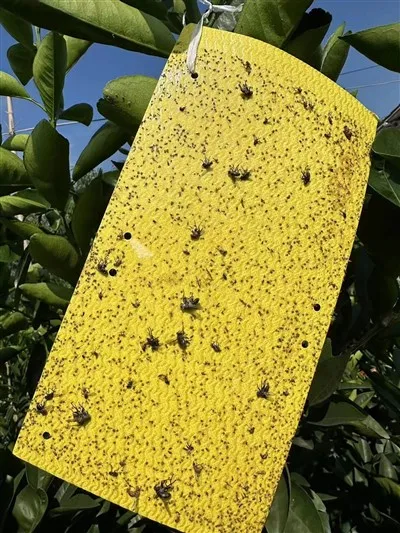
2. Physical trapping and repellency control: Lay silver-gray mulch in facility and open vegetable fields to block winged aphids from migrating into the plantations by utilizing their repellency characteristics; hang 400-700 yellow sticky insect boards evenly per hectare throughout the growing season, 15-20cm above the crop canopy, arranged vertically between crop rows, and replace the sticky insect boards regularly. Simultaneously monitor insect activity and trap adult insects to continuously reduce the density of migrating insect sources.

3. Ecological and biological green control: For light, localized infestations, release native natural enemies such as aphid parasitoid wasps and harlequin ladybirds to suppress aphids sustainably via ecological balance. At the early nymph stage, apply registered botanical pesticides including matrine and pyrethrins on cloudy days or evenings to avoid sun-induced efficacy loss and protect beneficial insects, ideal for green and pollution-free crop production.

4. Targeted chemical control: Initiate pesticide applications once thresholds are hit: ≥200 aphids per 100 wheat plants at jointing stage, or ≥5% aphid-infested plants in greenhouses. Use low-toxicity, low-resistance-risk insecticides recommended by agricultural authorities like flonicamid, dinotefuran and afidopyropen. Rotate products with different modes of action, limiting each chemical class to maximum two applications per season to delay resistance development. Thoroughly spray hidden aphid hotspots including new leaves, tender stems and leaf undersides, avoiding midday heat. Large contiguous farmlands adopt professional unified pest control for consistent, efficient results.
Reference Sources:
2025 national soybean pest forecast published by National Agro-Tech Extension and Service Center; field survey statistics from Heze Agriculture and Rural Bureau; Ministry of Agriculture and Rural Affairs 2025 grain pest control technical guidelines; local agricultural standard DB21/T 3502.5-2024.