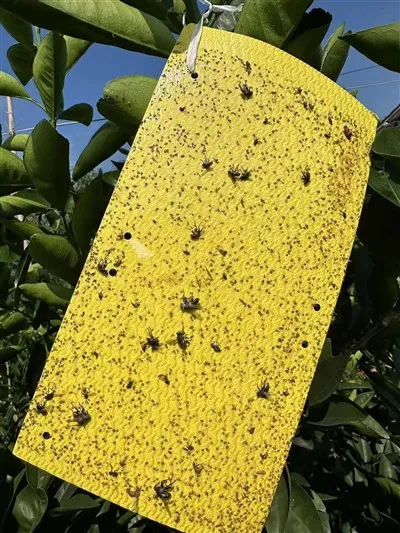
Plastic traps are an environmentally friendly pest control tool widely used in agriculture, forestry, and pest monitoring. Their core advantages lie in their low cost, ease of manufacture, and safety against non-target organisms. This article will detail the components and key design points of plastic traps.
I. Basic Components
Plastic traps typically consist of the following components:
Trapping Container: These are typically made of a transparent or translucent plastic bottle (such as PET), with a capacity ranging from 500 ml to 2 liters, depending on the target pest. The transparency of the container helps attract phototactic pests, while the translucent design reduces internal light scattering, enhancing trapping efficiency.
Lures or Attractants: Depending on the target pest, sex pheromones, food-borne attractants (such as sweet and sour liquid), or plant volatiles can be used. The lure is typically suspended inside the container to ensure even scent distribution.
Entrance Design: Plastic traps come in a variety of entrance styles, including the following:
Funnel-shaped entrance: Cut an inverted tapered opening in the side or top of the bottle, leveraging pests' attraction to enter and making it difficult for them to escape.
One-way valve: Create a channel through a plastic sheet or mesh structure that only allows entry.
Open-type design: Punch a hole directly into the bottle cap or body, suitable for crawling pests with limited flight.
Support and fixing device: This includes a hook, rope, or bracket for hanging the trap in the target area (such as a tree canopy or field). Some designs feature a weighted base to prevent it from being blown over by the wind.
II. Manufacturing and Assembly Methods
Materials: Choose durable, UV-resistant plastic bottles to prevent aging and cracking due to long-term exposure. Use cutting tools to ensure smooth cuts to minimize physical obstacles to pests.
Entrance Processing: If a funnel-shaped design is used, use heat or a knife to trim one side of the bottle into a 45°-60° angled entrance. Apply a small amount of petroleum jelly to the inner wall to reduce escape rates.
Lure Core Placement: Place the attractant at the bottom of the container or hang it in the center. Liquid attractants (such as vinegar) should be added with a small amount of detergent to reduce surface tension and promote drowning of pests.
Optimization and Improvement: Some advanced designs incorporate dividers or reflective panels inside the bottle to enhance attraction through light refraction. Color selection (e.g., yellow attracts aphids) can also be used to enhance targeting.
III. Applications and Precautions
Plastic traps are suitable for monitoring or controlling agricultural pests (such as fruit flies and fall armyworms) and sanitary pests (such as mosquitoes). Regularly remove dead insects and replace the lure core to prevent decay from affecting its effectiveness. Furthermore, for different environments (such as high temperature and high humidity), more corrosion-resistant plastic materials (such as HDPE) can be selected.
By scientifically designing the structure of plastic traps, efficient and low-cost pest management can be achieved while reducing the use of chemical pesticides, meeting the development needs of sustainable agriculture.