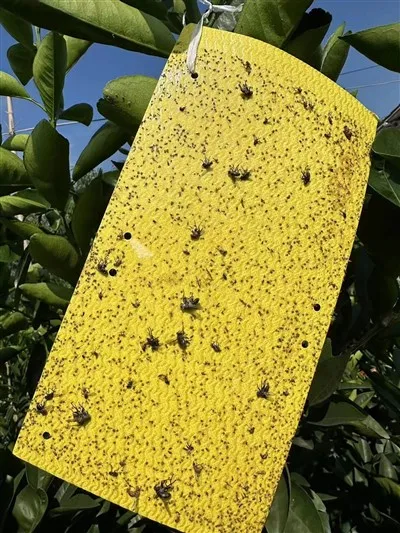
Plastic traps are a widely used non-chemical pest control tool in agriculture, pest monitoring, and ecological research. Their core principle is to attract pests or other target organisms to a specific area by mimicking the target organism's habitat or exploiting its tropism (such as phototaxis, chemotaxis, or visual attraction), thereby achieving capture, monitoring, or control.
Structurally, plastic traps are typically made of lightweight, durable plastic materials, offering low cost, high plasticity, and good environmental adaptability. They come in a variety of designs, including common funnel-shaped, sticky plate-shaped, barrel-shaped, and composite structures with lure cores. Different trap types are optimized for the habits of different target organisms. For example, for small flying insects like fruit flies, yellow or blue sticky plate traps are often used, leveraging the strong visual appeal of these colors. For certain subterranean pests, traps may be designed with open plastic containers filled with bait or equipped with trap structures.
Plastic traps primarily operate based on the following mechanisms:
1. Visual attraction: Many insects are attracted to specific colors (such as yellow or blue) or reflective materials. Plastic traps use surface color or sheen to mimic natural targets such as flowers and leaves, attracting pests.
2. Chemical bait: Some traps contain a built-in lure that releases pheromones, sweet and sour mixtures, or other chemicals, leveraging the insects' olfactory or gustatory cues to lure them into the trap.
3. Physical barrier: Funnel-shaped or angled plastic structures make it easy for insects to enter but difficult to escape, ultimately trapping them at the bottom of the container or on a sticky board.
The advantage of plastic traps lies in their environmental friendliness-they eliminate the need for pesticides, reducing potential harm to ecosystems and human health. They also facilitate large-scale deployment and monitoring. In agriculture, they can provide early warning of pest population density, helping farmers apply pesticides with precision. In ecological research, they can provide data on the activity of target species, assisting in biodiversity assessments.
With advances in materials science and insect behavior, the design of plastic traps is evolving towards greater efficiency and intelligence, such as integrating sensors to enable remote monitoring. In the future, this simple yet effective tool will play a more important role in sustainable agriculture and ecological conservation.